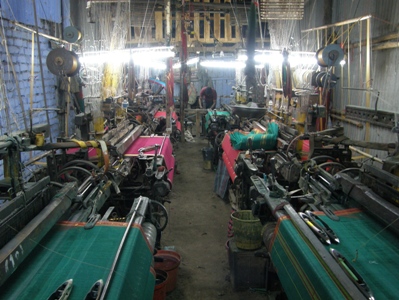
Well-come to MalegaonMalegaon is a Talluka which is under Nasik district. Malegaon is a city in the state of Maharashtra, India Malegaon is famous for Power Loom (City of Power Loom) Schools in Malegaon
Malegaon (Marathi: मालेगाव, Urdu: مالیگاوں) is a city and a Municipal Corporation in the Nashik district in the Indian state of Maharashtra. It is located at around 280 km northeast of state capital Mumbai. Malegaon lies at the confluence of Girna and Mousam rivers. Malegaon is one of the largest cities in northwest Maharashtra. It is second largest city of Nashik district after Nashik city. As majority of Malegaon's population belong to Hindu and Muslim communities, the vast city's education system has been able to support various languages (Urdu/Marathi/English) through numerous institutions: Despite all this, Malegaon has seen the infrastructure and quality of life deteriorate over the years[citation needed]. While population has grown from 121,000 in 1961 to an estimated 1,000,000 people now, the roads, drainage systems, civil hospital, telecommunication are still not developed fully. Geography Malegaon is located at 18°25′N 77°32′E / 18.42°N 77.53°E / 18.42; 77.53[1]. It has an average elevation of 438 metres (1437 feet). HistoryMalegaon Fort Malegaon is located on the Mumbai-Ag EconomyDemographicsAs of 2001[update] India census[2], Malegaon had a population of 409,190. Males constitute 51% of the population and females 49%. Malegaon has an average literacy rate of 66%, higher than the national average of 59.5%: male literacy is 70%, and female literacy is 61%. In Malegaon, the ST consists of 12% and around 11% are SCs. About 18% of the population is under 6 years of age. In addition, most of the children forced to work at teenage to help the family, because of poverty. Now the plastic industry is growing day by day. The daily production of plastic is near about 1,50,000 meters. Proposal to carve out Malegaon DistrictThe Nashik district is under proposal to be divided and a separate Malegaon district be carved out of existing Nashik district. Urdu in Malegaon Malegaon is major centre of the Urdu language. It is home to various Urdu institutes and Urdu poets. It is the only city in India where one can find street names written in Urdu. Urdu is prevalent, but the local dialect is more like the pronunciation in Uttar Pradesh and Bihar. BombingsMain article: 2006 blasts at Malegaon
On 8 September 2006, at least 37 people died and at least 125 were seriously injured when three bomb blasts hit a cemetery in Malegaon town. Main article: 29 September 2008 western India bombings
On 29 September 2008, the eve of Navrati, one bomb exploded in Gujarat killing one person and two in Malegaon killing seven persons. The incident was politicized due protesters demonstrating, alleged involvement of Hindu organizations, and alleged incorrect action taken by various political parties. |
||